
Command / MicroForce & AxialForce
Command Propulsion & Fluid Management Systems
Ultra-lightweight Type III construction and compact packaging for propulsion and fluid-management systems. MicroForce provides the diaphragm architecture; AxialForce piston technology is coming soon.
- Positive fluid control
- Compact composite construction
- Program-specific integration

Controlled Rapid Delivery.
Command MicroForce and AxialForce are positioned for lightweight, cost-effective propulsion fluid management. Diaphragm and piston architectures support rapid, controlled delivery and positive fluid control in dynamic and zero-gravity environments. Confirm fluid compatibility and mission requirements for each configuration.
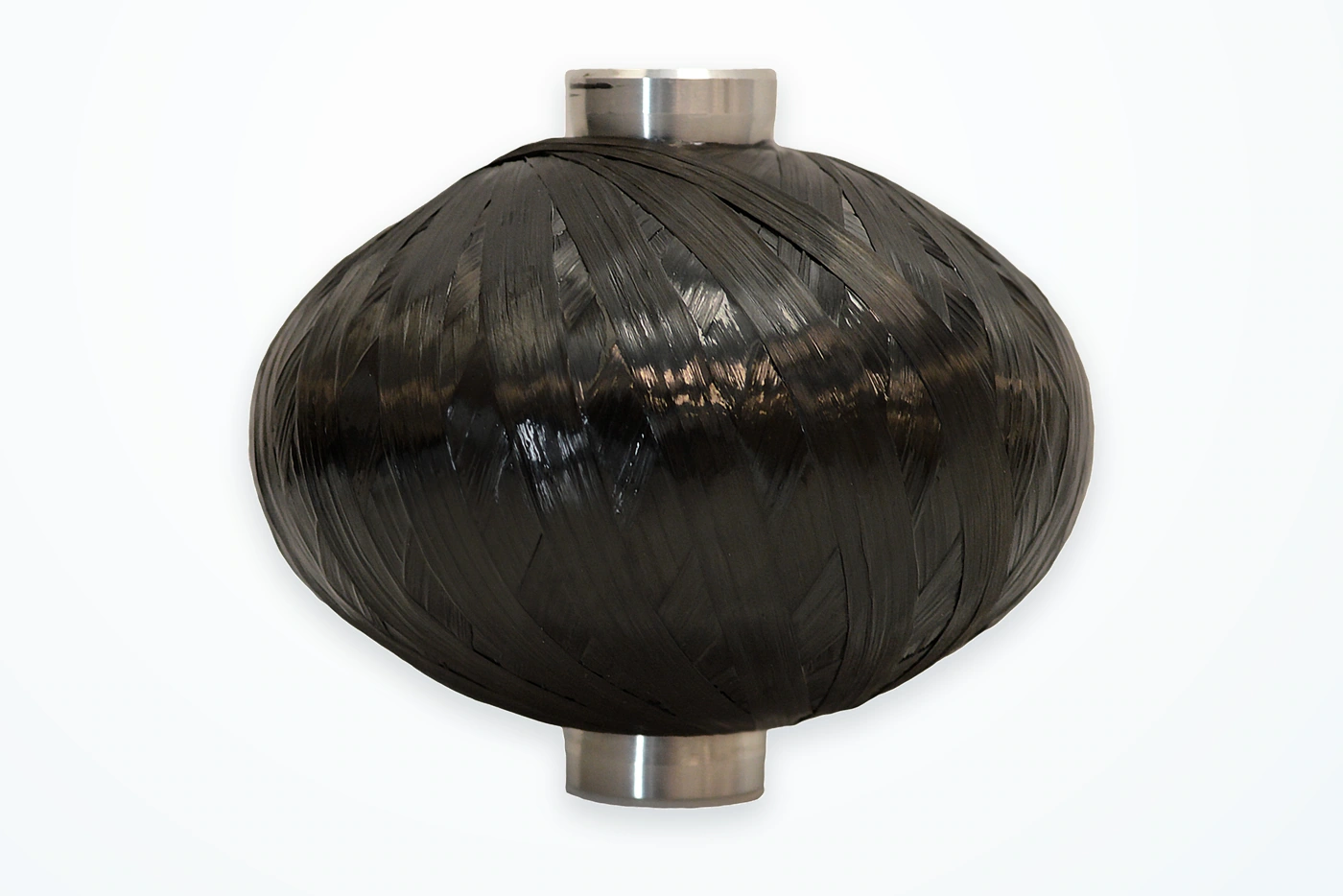
Command MicroForce
0.5 L diaphragm platform
The smallest documented MicroForce configuration for systems where mass and envelope are tightly constrained.
Documented pressure
3,500 PSI / 241 bar
Approximate envelope
5.1 in × 4.9 in
Approximate mass
1.2 lb / 0.5 kg
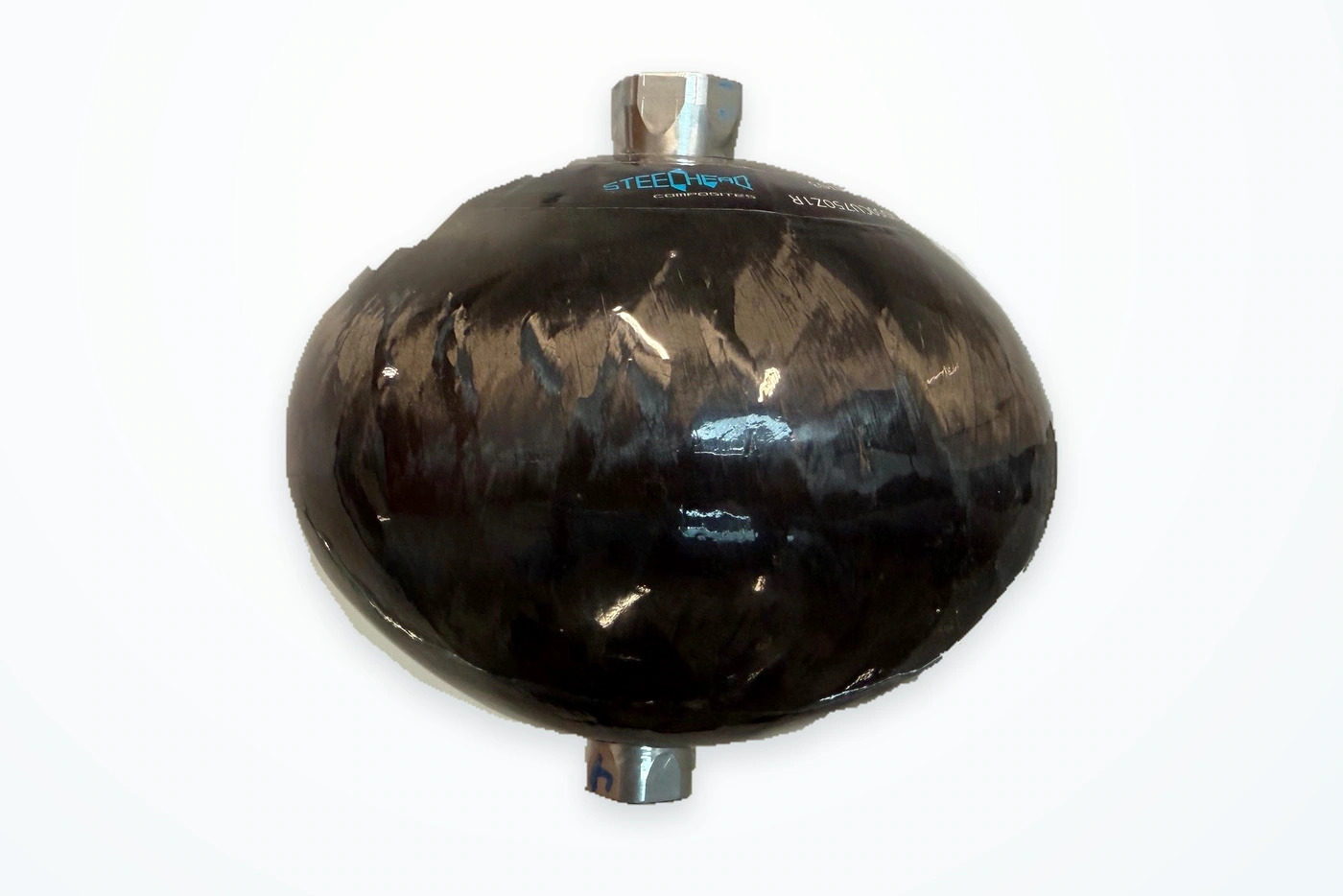
Specifications on request
Command MicroForce
1 L family option
The current family architecture includes a 1 L option. Contact Steelhead for the current public specification and configuration.
Volume option
1 L
Pressure / envelope / mass
Confirm with Steelhead
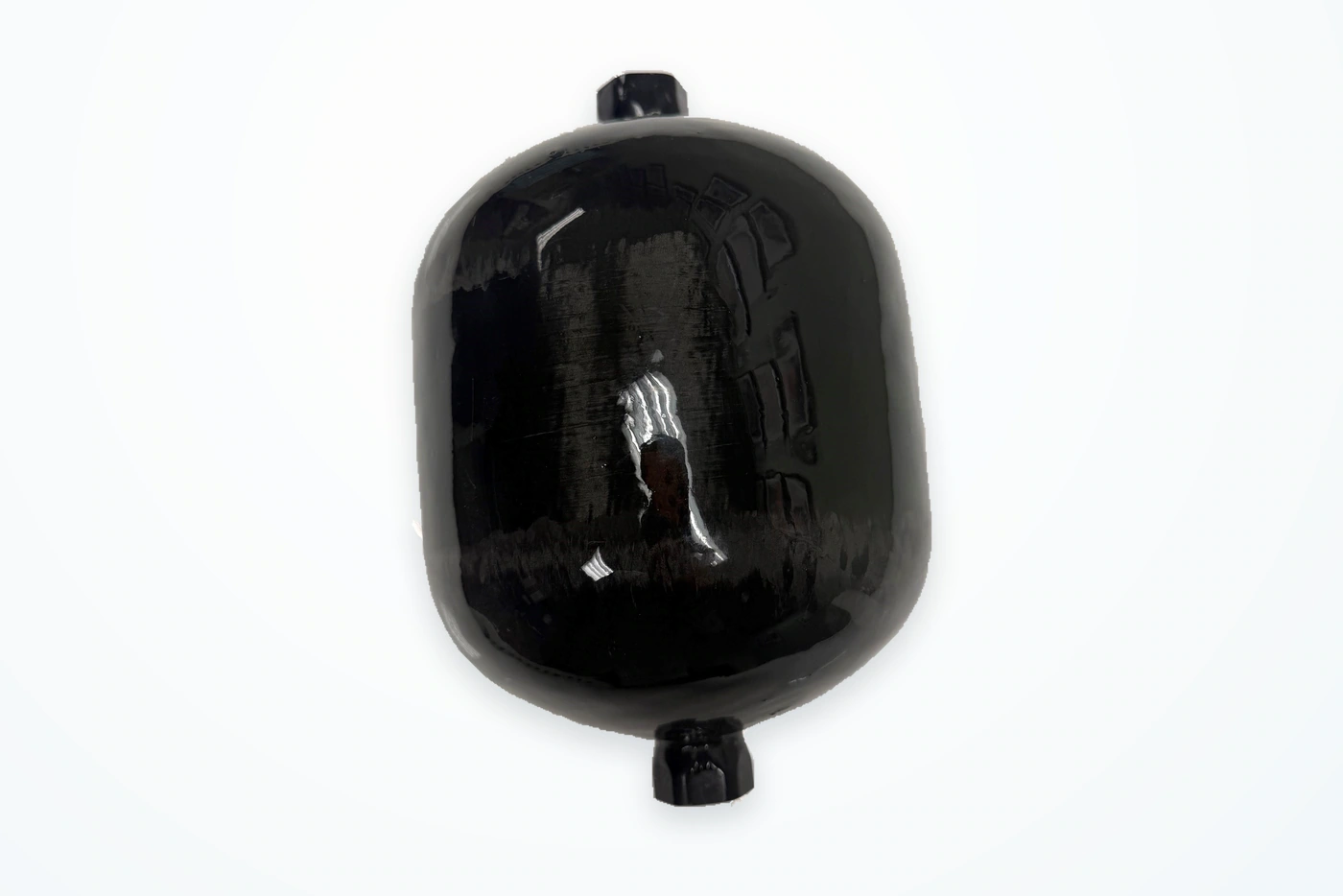
Command MicroForce
2 L diaphragm platform
Greater hydraulic volume while retaining the mass advantages of composite construction.
Documented pressure
3,000 PSI / 207 bar
Approximate envelope
10 in × 6.2 in
Approximate mass
4 lb / 1.8 kg
Values shown are documented platform references, not a universal rating for every photographed or customized unit. Confirm the current configuration, fluid connections and application requirements with Steelhead.
Documented Construction & Operating Range.
The platform specification is selected around the application.
| Parameter | Source-documented information |
|---|---|
| Pressure-vessel architecture | Type III |
| Maximum operating pressure | 500–3,500 PSI, depending on configuration |
| Minimum burst pressure | Designed for the application; confirm the required value |
| Operating temperature | −20°F to 185°F / −30°C to 85°C, as documented |
| Liner | Impermeable 6061-T6 aluminum; other options available |
| Structural shell | Carbon fiber and epoxy composite |
| Fluid connections | Customizable |
Piston architecture / coming soon
Command AxialForce
The Command family also includes an axial piston development path. Public specifications and availability details for AxialForce are not yet provided. Discuss the program requirements with Steelhead.

Aerospace integration
Fluid Control Around the Mission.
Evaluate accumulator mass, packaging, structure, vibration and interface requirements together. MicroForce is positioned for weight-restricted flight, defense, mobile and advanced hydraulic systems.
- Gas or fluid and material compatibility
- Pressure, temperature and operating environment
- Mass and available system envelope
- Fluid connections and integration requirements
- Qualification and test planning
Aerospace Command. Commercial Bladder Accumulators.
Commercial PowerMax, MicroMax and AccuLite remain in the Commercial Pressure Vessels section. Keep their specifications separate from the specialized MicroForce and AxialForce architectures.
Commercial Hydraulic Accumulators
PowerMax, MicroMax and AccuLite for commercial fluid-power requirements.
Engineering & Qualification
Develop the configuration and qualification path around the aerospace program.
Start with the requirement
Bring the Fluid-Management Requirement.
Share the fluid, pressure, volume, available envelope and mission environment to discuss the appropriate Command architecture.